A Teaching Tool
PRESENTATION MODE — PRESS P TO EXIT
KEVIN_AMEN_CLINIC · BRAIN HEALTH

What my brain actually looks like — and what it taught me.

On paper I looked textbook healthy. Then I got a SPECT scan at Amen Clinics. This is the story those images told, translated into plain English, and the protocol I built around it. A personal teaching tool — take what's useful.

Press ↓ to continue
WHY SPECT

Most brain imaging shows structure. SPECT shows function.

An MRI or CT tells you what the brain looks like. A SPECT scan measures blood flow and activity — what the brain is actually doing. It surfaces three things: areas that work well, areas that work too hard, and areas that don't work hard enough.

Structure vs. function

MRI / CT: anatomy — tumors, bleeds, physical damage.

SPECT: physiology — perfusion and activity patterns that map to mood, focus, anxiety, and attention.

Because it reads function, SPECT can reveal patterns that symptom-based checklists and structural scans miss entirely.

Meet Dr. Daniel Amen

Psychiatrist and founder of Amen Clinics, home to one of the world's largest databases of functional brain scans — tens of thousands and counting.

His core message: you can't change what you can't see, and the brain you have is not the brain you're stuck with.

Amen Clinics Locations

The most important lesson from 83,000 brain scans

Dr. Amen's TEDxOrangeCoast talk — the case for looking at the brain before treating it.

Go deeper — long-form

For hours of Dr. Amen on brain health, nutrition, and the science behind SPECT, his own show is the most reliable, continually updated source.

  • Change Your Brain Every Day — Dr. Amen's daily brain-health show
  • Interviews on major long-form podcasts covering diet, supplements, and mental wellness

Amen Clinics on YouTube

WHERE I SCORE HIGH

Let's start with what's working.

The Total Brain assessment measures dozens of cognitive and emotional capacities against population norms. Here's where the numbers came back strong — the foundation everything else builds on.

100th
Resilience
97th
Social Connectivity
85th
Planning
76th
Emotional Flexibility
74th
Anxiety Control

Percentiles are relative to population norms on the Total Brain assessment. Resilience at the 100th percentile is the headline — the capacity to absorb stress and recover.

WHAT THE STANDARD SCREENS SHOWED

On paper, textbook healthy.

Every standard mental-health screener came back at or near zero.

PHQ-9 1 GAD-7 0 PTSD not at risk ADHD not at risk Substance not at risk Sleep apnea not at risk

But SPECT told a more nuanced story.

MY BRAIN, UNCOVERED

Three scans. Toggle clean to annotated.

These are my actual SPECT images from Amen Clinics, read by Dr. Creado. All identifying information has been removed. Switch each scan between the raw view and the annotated view to see exactly what the clinician saw — with the technical finding translated into how it can actually feel day to day.

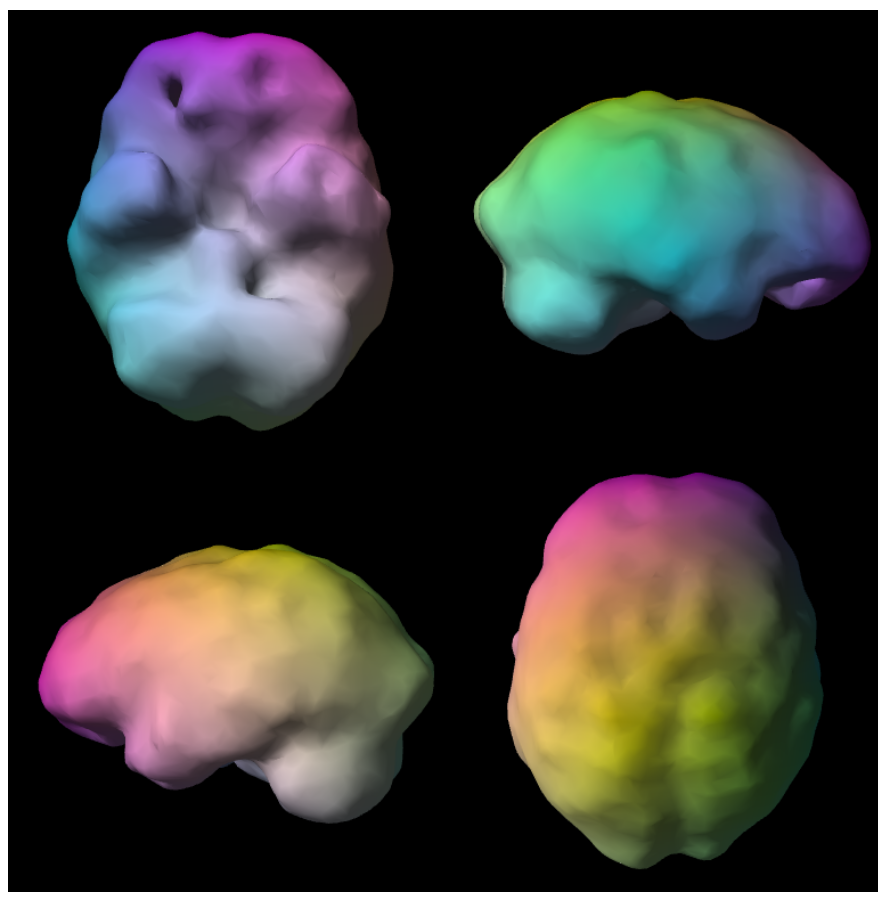
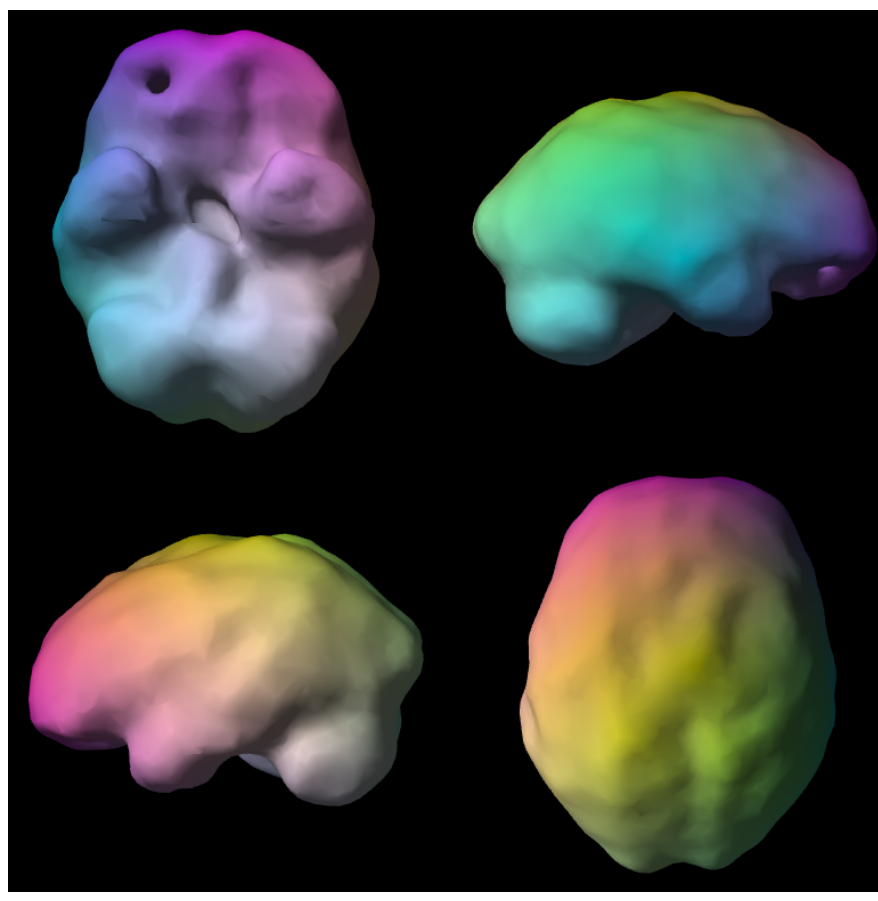
Baseline — brain at rest

Baseline SPECT surface render — four-view brain montage, resting state

What this scan captured: brain activity at rest, in a quiet room, with no task — the resting baseline.

What Dr. Creado saw:

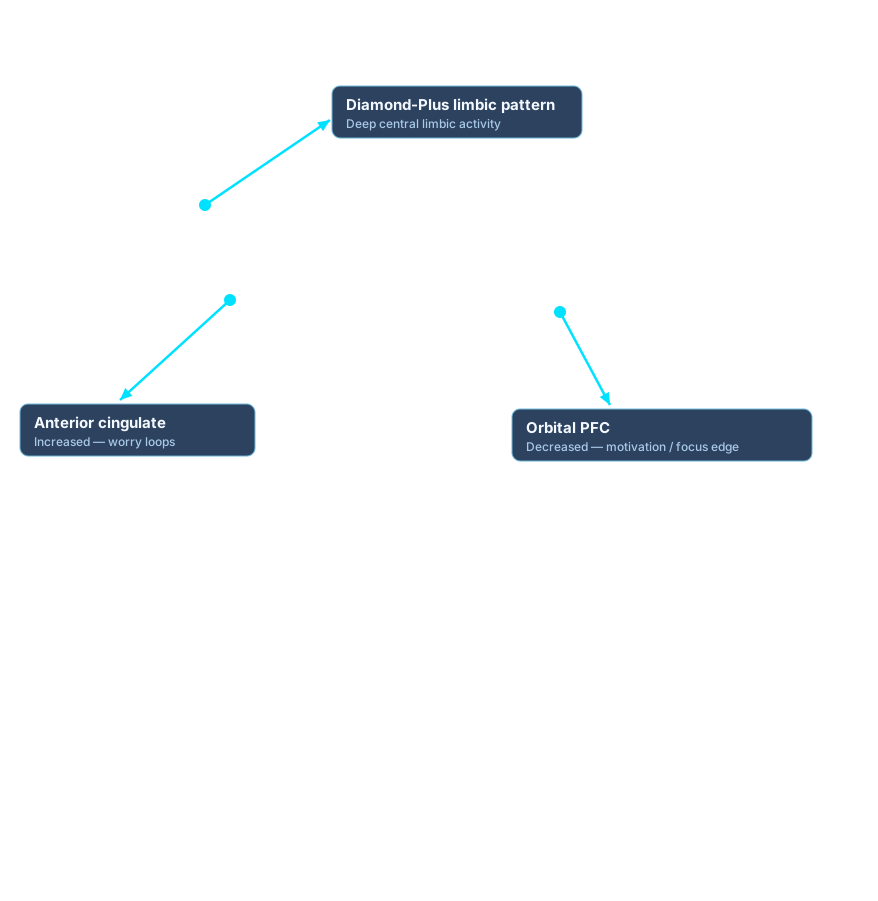
  • Limbic system Diamond-Plus pattern of limbic activity Can present as past emotional trauma and heightened emotional processing.
  • Anterior cingulate gyrus Increased activity Difficulty shifting attention, a tendency to worry, getting stuck on thoughts.
  • Inferior orbital prefrontal cortex Decreased bilateral activity A signature seen with the depression + ADD/ADHD combination, or a past head-injury pattern.

Concentration — brain on task

Concentration SPECT surface render — four-view brain montage, on-task state

What this scan captured: brain activity during a demanding concentration task (a continuous performance test).

What Dr. Creado saw:

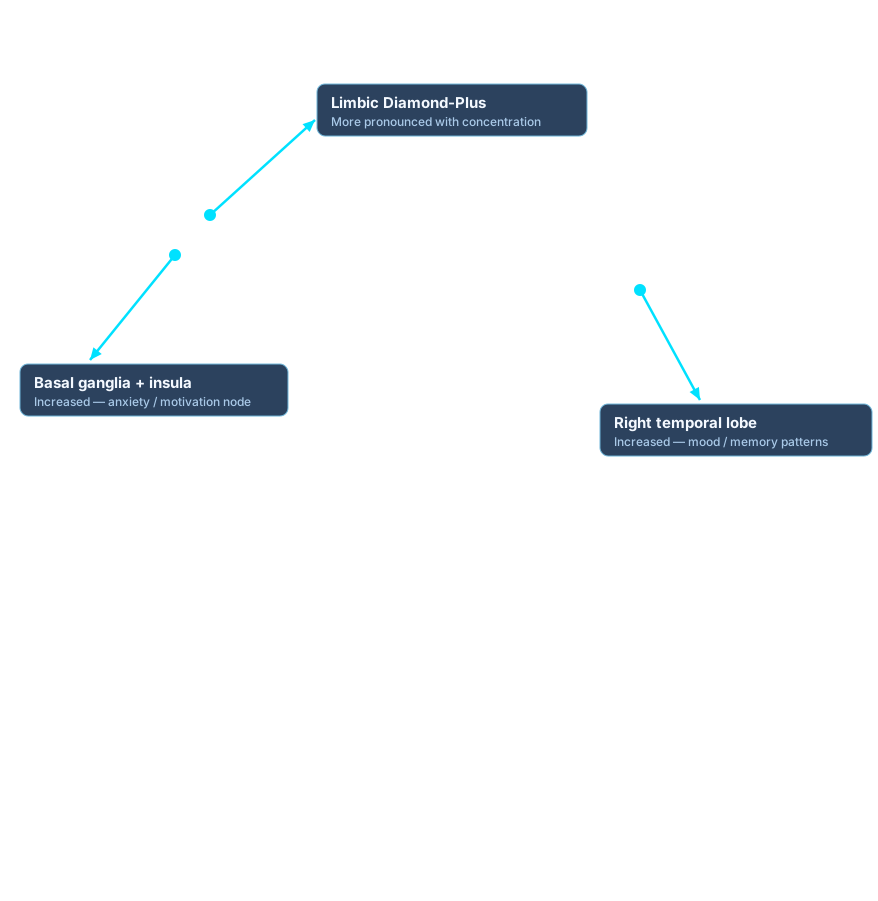
  • Limbic system Diamond-Plus, more pronounced with concentration Emotional processing ramps up precisely when focus is demanded.
  • Right temporal lobe Increased activity Mood instability, irritability, memory glitches, déjà vu, unexplained headaches.
  • Basal ganglia + insula Increased bilaterally, more intense with concentration Anxiety when engaged; when balanced, the same node drives high motivation and drive.

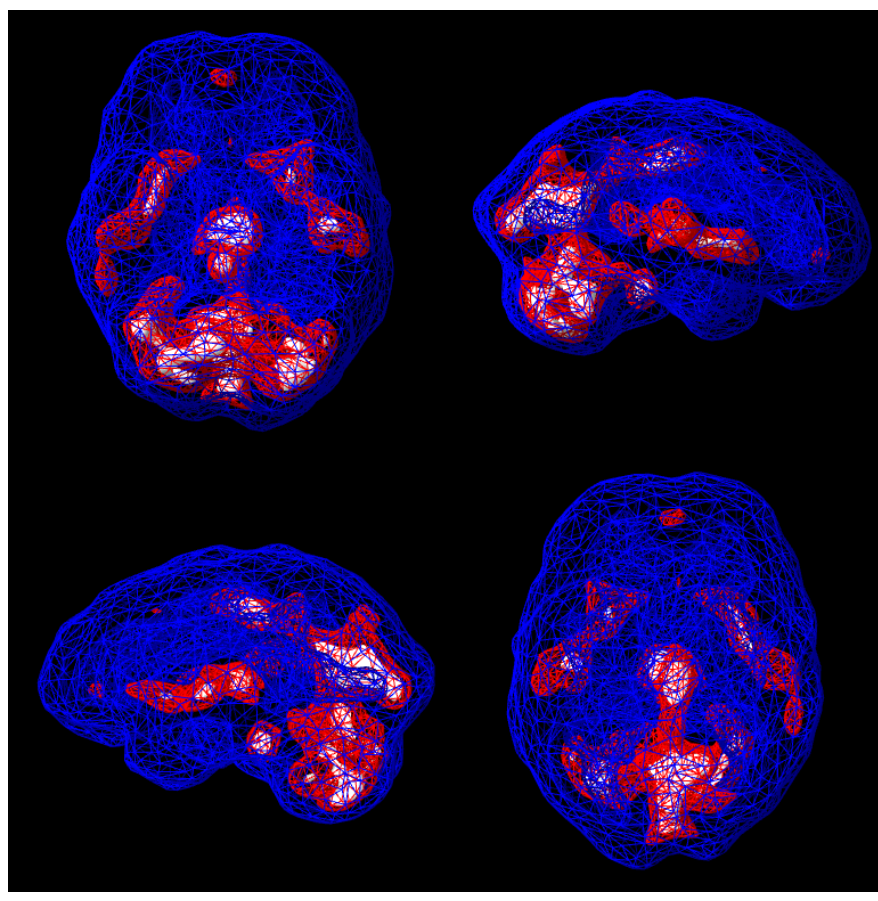
Active blood flow — the 3D overlay

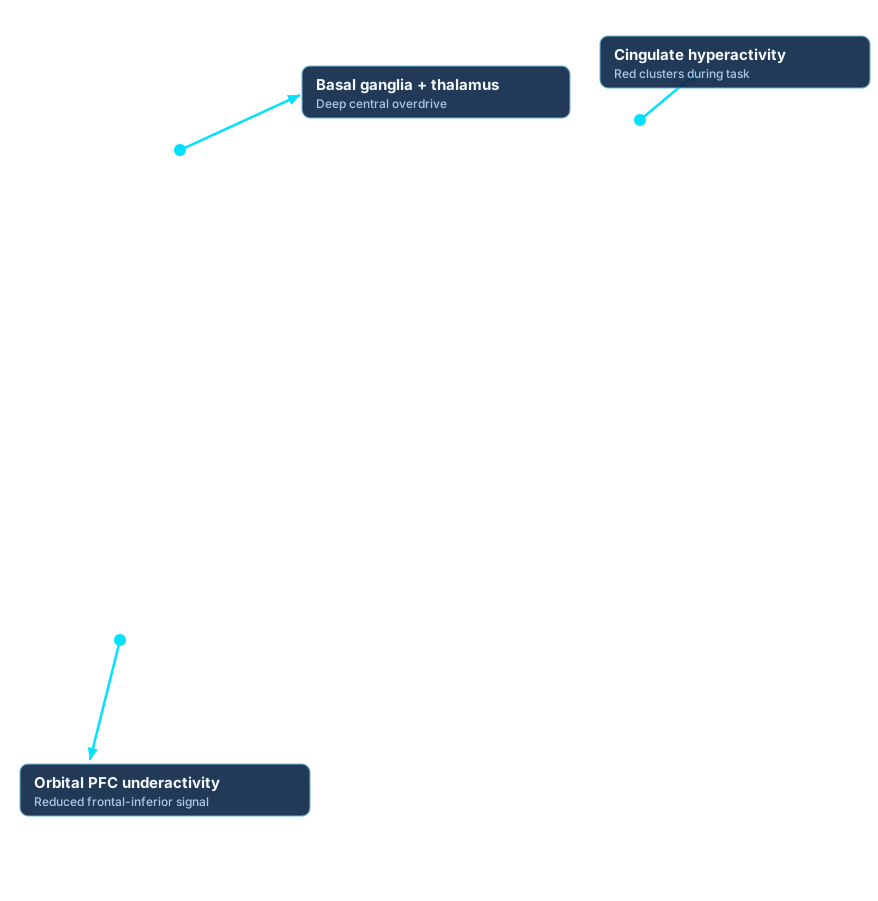
Blood-flow SPECT — 3D active overlay, blue wireframe with red hotspots

What this scan captured: the most active 15% of blood flow (red) mapped over the brain surface (blue) during the concentration task.

What Dr. Creado saw:

  • Basal ganglia + thalamus Deep central hotspots — overdrive The brain's alarm-and-motivation circuitry running hot under load.
  • Anterior cingulate Frontal red clusters during task The "worry gearbox" lighting up exactly when shifting attention is required.
  • Orbital prefrontal cortex Reduced frontal-inferior signal The brakes-and-focus region running quiet — the focus edge, made visible.
THE DATA

The cognitive tests behind the scans.

The scans are the picture. The test scores are the corroboration — the same story told from a different angle. Here are the growth edges, each tied back to the scan finding it lines up with.

Total Brain — growth edges

34PERCENTILE
Focus. Maps to the anterior cingulate + orbital PFC findings — the shift-and-sustain circuitry.
30PERCENTILE
Flexibility. Maps to the anterior cingulate — the "getting stuck" pattern.
41PERCENTILE
Recall Memory. Maps to the right temporal findings.

Conners CPT 3 — corroboration

No ADHD indication overall — only one atypical score. The cognitive test agrees with the scan: this isn't classic ADHD.

T 72VERY ELEVATED
HRT ISI Change. Substantial slowdown in response speed at longer intervals — a vigilance edge that ties to the orbital PFC + cingulate findings.
T 30VERY LIBERAL
Response style. Speed over accuracy — ties to the right-temporal / basal-ganglia impulsivity signature.
T 59HIGH AVERAGE
Commissions. Slightly above-average impulsive responses.
Same story, three instruments: the scan, the Total Brain percentiles, and the Conners CPT all point to the same focus-and-vigilance edge — sitting right alongside genuine strengths.
THE FRAMEWORK

The Three Pillars

Every optimization below fits into one of three domains. Master all three.

FOUNDATION

Test. Measure. Baseline. You cannot optimize what you do not track.

DAILY INPUTS

Food, supplements, sleep, movement — the compounding daily deposits.

SUPERCHARGE

Sauna, HBOT, vagal stimulation, toxin defense — the accelerators.

01 · FUEL

Feed the machine that runs everything.

Stick To

  • Wild-caught fish
  • Grass-fed meat
  • Organic greens
  • Protein: 1.5 g per kg body weight daily

Minimize

  • Pasta, rice, wheat, white potatoes (fast carbs)

Avoid

  • Sugar
  • Processed foods
  • Seed oils

Cook With

Labeled "glyphosate residue free"

  • Avocado oil
  • Butter
  • Ghee
  • Beef tallow
  • MCT oil

Protocol

  • 18:6 intermittent fasting window

The 8 × 8 Rule

Eight 8-ounce glasses daily. About 2 liters. Half a gallon.

Water source: Mineral water or reverse osmosis only. Tap water carries arsenic, fluoride, forever chemicals, microplastics, atrazine, hormones, antibiotics, and lead.

02 · STACK

The Supplement Protocol.

Screen every supplement quality first.

If you follow this protocol, you can stop your standard multivitamin.
Morning Stack (once daily)
SupplementDoseOrder
Brain and Body Power Max1 packetBrainMD
Astaxanthin12 mgSports Research
C15:0100–200 mg dailyFatty15
Vitamin D3 + K25000 IU (125 mcg) + 100 mcg K2Thorne D/K2
Nattokinase2000 SUSwanson
Morning + Afternoon Stack (twice daily)
SupplementDoseOrder
Creatine*5 gBrainMD Smart Creatine or Create Gummies (NSF)
Liposomal NAD+Per labelRho Nutrition
Phytosomal Curcumin (Meriva)1000 mgThorne
Omega-3 Power1 softgel (~750 mg EPA+DHA)BrainMD
NAC1200 mgBrainMD
Lithium Orotate10 mgSwanson or BrainMD
L-Theanine400 mgThorne
Tyrosine (Joyli gummies)1000 mgJoyli
Sulforaphane1 capThorne
*Creatine — only take if your last blood test shows GFR > 59.
Night Stack
SupplementDoseOrder
Stress Relief Sleep3 capsBrainMD
03 · RESTORE

Sleep is when the brain cleans itself.

Sleep Architecture

Target: 7.5 hours = 5 sleep cycles × 90 minutes.

Position: Sleep on your non-dominant side (improves glymphatic clearance).

Reference: Sleep position & dementia risk

Last Meal Rules

  • Eat ~2 hours before bed.
  • Minimize fast carbs and sugars.

Good choices: Protein + slow carbs — sweet potatoes, carrots, avocado, banana, kiwi, asparagus, fish, kefir, sauerkraut.

Wind-Down (starts 9 PM, out of bed)

  • Dim all lights
  • Blue-light blocking glasses — Swannies · Ra Optics · TrueDark
  • No screens, no gadgets, no stimulating content
  • Scheduled worry time + to-do list (get it out of your head)
  • Warm shower or sauna
  • Boring reading only

NSDR / Calming Protocols

2–3× daily ideally

  • Yoga Nidra 10-min: Watch
  • Yoga Nidra 30-min: Watch
  • Physiological Sighing: Regular inhale → short second inhale → long slow exhale. Demo

Sleep Schedule Anchor

10:00 PM or later: Only get in bed when sleepy.

5:30 AM: FIXED wake time. Alarm on. Get out of bed immediately.

04 · MOVE

22 minutes. That's all.

TARGET HR = (220 − YOUR AGE) × 70–75%

Frequency: 5–7 days per week

Duration: 22 minutes per session

Benefits: Telomere lengthening, endocannabinoid boost

Options: Stationary bike · elliptical · treadmill · brisk walking (like you're running late)

05 · SUPERCHARGE

The accelerators.

Layer these once the foundation is locked in.

Sauna

Frequency: 3× per week minimum. Work up to 5–7× for maximum protection.

Protocol

  • Under 170°F → 40 minutes
  • 170°F or higher → 20 minutes

Data: 2–3×/week reduces dementia risk by 30%. 5–7×/week reduces it by 60%.

Research: Mayo Clinic Proceedings

Note: Most infrared saunas top out at 140°F. Traditional saunas hit 170–180°F (therapeutic zone).

Only infrared reaching 180°F: Sauna Pod by Pod Company

Hyperbaric Oxygen Therapy (HBOT)

Protocol: Most days of the week. 60–90 minutes per session.

Pair with: An oxygen concentrator (required for full benefit).

Research hubs

Own your machine: Summit to Sea Order Form

Vagal Nerve Stimulation

Device: Truvaga

Side: RIGHT side only

Frequency: Minimum 2 stimulations, twice daily. Up to 15/day.

Toxin Defense

  • Scan every personal care product with the Think Dirty app.
  • Review certified glyphosate-free products at Detox Project
  • Environmental biotoxin resources: Biotoxin
THE DAILY FLOW

One page. One day. Rinse and repeat.

5:30 AM
Wake
Alarm off. Feet on floor. No snooze.
5:35 AM
Hydrate
16 oz mineral or RO water.
5:45 AM
Move
22-min zone-2 cardio at 70–75% max HR.
6:15 AM
Recover
Sauna session (if scheduled day) OR NSDR / physiological sighing.
7:00 AM
Stack 1
Morning supplements + first AM/PM stack dose. Break fast within your 18:6 window (or hold).
12:00 PM
Fuel
First (or main) meal — protein + greens + healthy fats.
2:00 PM
Stack 2
Second AM/PM stack dose.
2:15 PM
NSDR
10–30 min yoga nidra OR 3 rounds physiological sighing.
4:00 PM
Vagal
Truvaga — right side, 2 stimulations.
6:00 PM
Last Meal
Protein + slow carbs. ~2 hours before bed.
8:00 PM
Vagal
Truvaga — right side, 2 stimulations.
9:00 PM
Wind-Down
Out of bed. Dim lights. Blue-blockers on. No screens. Boring reading.
9:45 PM
Night Stack
Stress Relief Sleep — 3 caps.
10:00 PM+
Sleep
Bed only when sleepy. Non-dominant side. Target 7.5 hours.
BASELINE

You cannot optimize what you do not measure.

Blood Panel

  • Pull all blood work from the last 12 months.
  • Send results to your practitioner's assistant before starting the protocol.
  • Confirm GFR > 59 before adding creatine.

Sleep Study

  • Book an in-lab Polysomnogram — not a home test.
  • Purpose: measure sleep fragmentation, NREM/REM compromise, hypopneas, UARS.
  • Essential if you have a history of sleep apnea, UPPP surgery, or no follow-up sleep testing in 5+ years.
TAKEAWAYS FOR EVERYONE

The universal checklist.

None of the above is a prescription for you — it's mine. But almost everyone benefits from these fundamentals. Twenty things, grouped by pillar, each with why it matters.

FUEL

  1. Drink half your body weight in ounces of clean, filtered water daily — every cell function depends on it
  2. Eat protein at every meal (target 1g per lb of ideal bodyweight) — muscle mass predicts brain longevity
  3. Cut alcohol to zero or near-zero — SPECT scans show alcohol shrinks brain tissue at moderate use
  4. Add omega-3s (EPA+DHA 2–3g/day) — the single best-studied supplement for brain structure
  5. Eat the rainbow — colored plants provide the polyphenols that protect neurons

STACK

  1. Vitamin D3 + K2 (5,000 IU / 100 mcg) — most adults are deficient; low D correlates with depression + cognitive decline
  2. Magnesium glycinate (400 mg at night) — sleep, muscle recovery, and calm nervous system
  3. B-complex (methylated) — B12 + folate deficiency mimics dementia and depression
  4. Creatine monohydrate (5g/day) — proven for muscle AND now shown to boost cognitive performance under stress

RESTORE

  1. Anchor a hard 10 PM wind-down — sleep before midnight is metabolically different
  2. Get 10 minutes of morning sunlight in your eyes — sets circadian rhythm, dopamine, mood
  3. Screen off 60 minutes before bed OR wear blue-blockers — blue light suppresses melatonin for 90+ minutes

MOVE

  1. Zone 2 cardio 3x/week, 30 min minimum — grows new blood vessels in the brain
  2. One hard interval session weekly (Norwegian 4x4 or similar) — spikes BDNF, the brain's growth factor
  3. Lift heavy 2–3x/week — muscle is an endocrine organ that talks to your brain

SUPERCHARGE

  1. Sauna 3–4x/week at 175°F for 20 minutes — 50%+ reduction in dementia risk in Finnish studies
  2. Cold exposure 2–3x/week (60s cold shower minimum) — dopamine, focus, resilience
  3. Meditation or breathwork 10 min/day — measurable prefrontal cortex thickening in 8 weeks

PROTECT

  1. NEVER let anyone near your head without a helmet — motorcycles, bikes, skiing, contact sports. One TBI can rewrite your brain
  2. Get a baseline SPECT or comparable imaging if you can — you can't optimize what you can't see

Copy this list. Give it to someone you love.

Next: both practitioners' recommendations in one daily routine.

Next: Protocol